Get In Touch
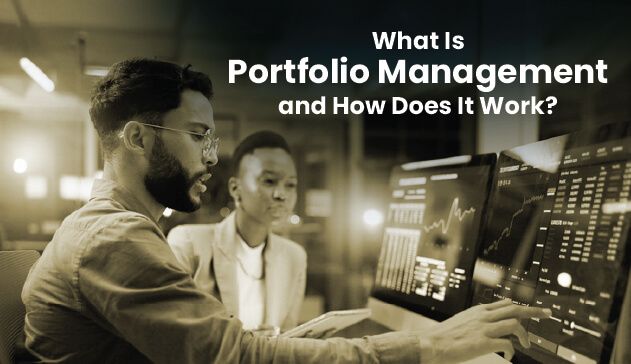
Portfolio management plays a crucial role in helping investors manage multiple investments effectively.
Investing in financial markets does offer opportunities to grow, but managing multiple investments can quickly become complex. As every asset behaves differently under different market conditions, making it difficult for investors to strike the right balance between risk and return.
This is where Portfolio Management plays an important role.
In this blog, we'll understand how portfolio management works, the types of strategies available, how it differs from PMS.
DIY portfolio management refers to the process of planning, selecting, monitoring, and adjusting investments in a portfolio to maximize returns while managing risk. Here, an individual (or investor) himself manages the portfolio.
A portfolio may include various asset classes such as:
The main objective of DIY portfolio management is to create a diversified investment mix that balances risk and return according to the investor's financial goals, risk tolerance, and investment horizon.
It can be done independently or with the help of a Portfolio Manager.
However, portfolio management is not just about selecting investments. It also involves continuous monitoring and adjusting the portfolio as market conditions and financial goals change over time.
Each type of DIY portfolio management offers different levels of involvement and flexibility depending on the investor's needs.
Common types of self portfolio management styles include;
The investor actively selects stocks or funds, frequently monitors the market, and buys or sells based on research, news, or market movements.
The investor tracks the market by investing in index funds or ETFs, aiming to replicate the performance of indices like the Nifty 50 or the Sensex.
The investor buys fundamentally strong companies and holds them for the long term, focusing on compounding rather than frequent trading. This philosophy is often associated with investors like Warren Buffett.
Investors concentrate their portfolio in sectors or themes they believe will perform well, such as banking, infrastructure, or technology.
The investor divides investments across different asset classes such as equity, debt, and gold to balance risk and return.
The portfolio management process typically follows a structured approach. However, it can be done in two ways - Self or via Portfolio Manager.
In a self-managed approach, the investor independently plans, builds, and monitors the portfolio.
Typical steps include:
This approach offers full control, but it requires time, market knowledge, and continuous monitoring.
Now, not everyone has time to personally manage their portfolio or analyze investments. And that's where PMS (Portfolio Management Services) exists, where a professional portfolio manager handles the investment strategy and execution on behalf of the investor.
How it typically works:
This approach benefits investors from professional expertise, structured portfolio strategies, and active portfolio monitoring, helping them stay aligned with their long-term financial goals.
Many investors make mistakes that can impact long-term returns.
This is where Portfolio Management Services (PMS) come in. A professional portfolio manager manages investment strategy and execution on behalf of the investor.
Professional expertise plays an important role in effective portfolio management. Experienced portfolio managers combine market research, financial analysis, and investment strategies to manage portfolios efficiently.
Their role typically includes:
Professional portfolio management helps investors navigate complex financial markets with a more informed and structured approach.
Precisely, one should consider portfolio management if;
If you plan to take portfolio management services, you and your portfolio are eligible for certain benefits. It includes;
Although these terms are related, they serve different purposes.
While DIY portfolio management focuses on managing investments, PMS offers professional portfolio management services. Here’s a table explaining the same:
| DIY Portfolio Management | PMS (Portfolio Management Services) | |
| Meaning | Managing investments to achieve financial goals. | Professionally managed investment portfolio tailored to investors. |
| Management Style | Self-managed or advisor-led. | Managed by SEBI-registered portfolio managers. |
| Customization | Limited, depending on the investor's capability. | Highly customized portfolios for each investor. |
| Market Monitoring | Investor tracks and adjusts investments. | Continuous monitoring and active portfolio adjustments. |
| Investment Expertise | Depends on the investor's knowledge. | Backed by research teams and professional expertise. |
| Primary Objective | Manage investments. | Optimize wealth creation through expert management. |
Portfolio management has evolved significantly over recent years with advancements in financial research, technology, and data analytics. Today, investors have access to more sophisticated investment strategies and tools than ever before.
However, the core principle remains the same: Building a diversified portfolio aligned with financial goals and managing it systematically over time, considering one's risk profile.
Lastly, whatever method you go with, consider the risk that comes with it, and whether alpha is possible that can help you achieve your goals.
A well-managed portfolio typically includes proper asset allocation, diversification across asset classes, risk management, and periodic portfolio rebalancing to maintain alignment with financial goals.
Disclaimer:
The information provided in this article is for educational and informational purposes only. Any financial figures, calculations, or projections shared are solely intended to illustrate concepts and should not be construed as investment advice. All scenarios mentioned are hypothetical and are used only for explanatory purposes. The content is based on information obtained from credible and publicly available sources. We do not guarantee the completeness, accuracy, or reliability of the data presented. Any references to the performance of indices, stocks, or financial products are purely illustrative and do not represent actual or future results. Actual investor experience may vary. Investors are advised to carefully read the scheme/product offering information document before making any decisions. Readers are advised to consult with a certified financial advisor before making any investment decisions. Neither the author nor the publishing entity shall be held responsible for any loss or liability arising from the use of this information