Get In Touch
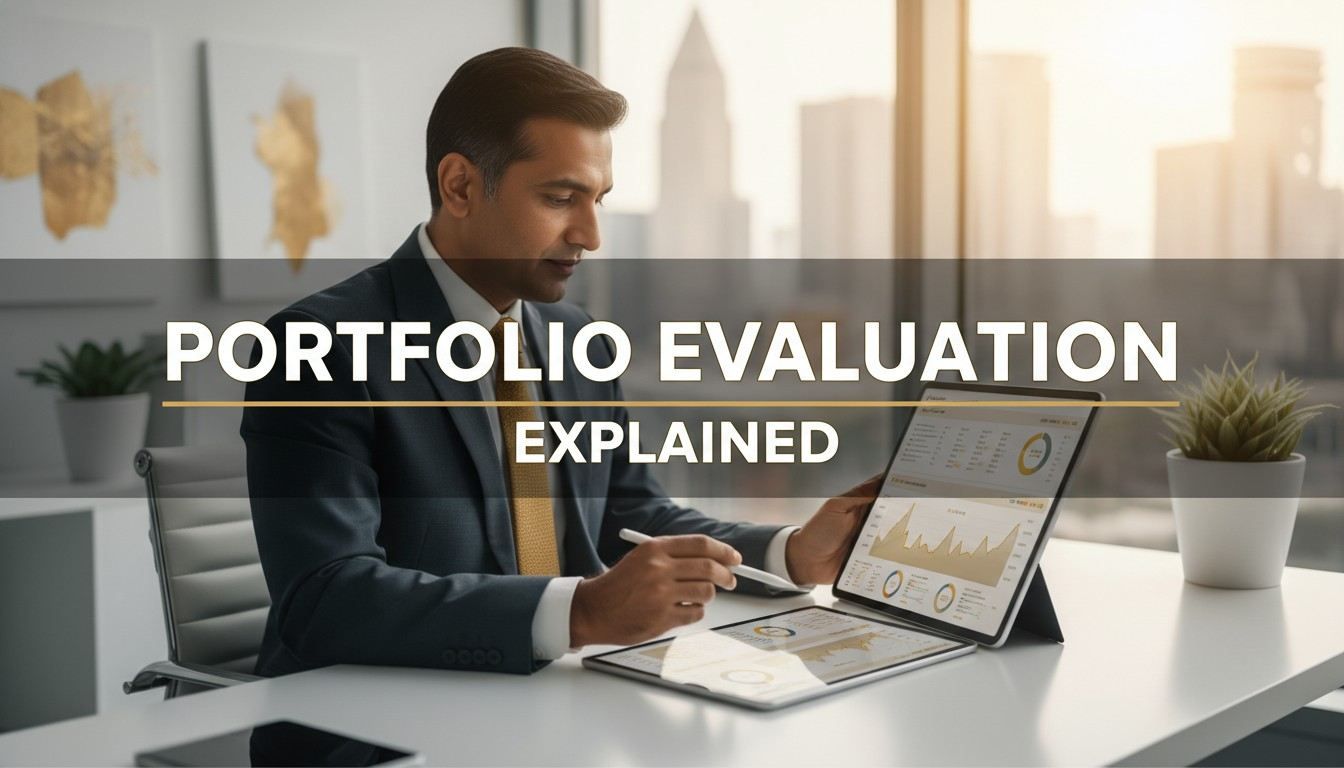
Most investors spend a lot of time choosing investments – which mutual fund, which stock, which SIP amount, everything gets researched.
But after investing, very few people watch their portfolio. People check returns occasionally, feel happy or worried, and move on.
And here's what fund managers say, "Investing Is Not Only About Creating A Portfolio. It Is About Understanding Whether That Portfolio Is Still Working For You Or Not."
Stay tuned as we'll break down Portfolio Performance Evaluation in a simple, practical way — so you actually know what to look at, why it matters, and how you can start doing it yourself.
Keep reading!
Portfolio evaluation means analysing your entire investment portfolio to understand two basic things:
It's like doing a health checkup of your body and understanding if there's any underlying issue.
Now, a checkup doesn't mean just weight. Doctors check blood pressure, sugar levels, heart rate, and lifestyle habits. The same logic applies here
Until now, your portfolio might be happy, but what if:
That's why Portfolio Performance evaluation should matter to you.
When markets change, your income and goals also change. If the portfolio stays the same forever, it slowly stops aligning with your life.
And portfolio evaluation is not just checking returns - it’s understanding how those returns are derived and whether they justify the risk taken.
Once you evaluate, you will understand how aligned your portfolio is, whether your investments are bearing higher risk than your profile, and are returns are justifying your goals or not.
There isn't just one way to evaluate a portfolio. Fund managers usually look at it from multiple angles because returns alone never tell the full story – you need to take a 360-degree view.
Here you analyse returns over different time periods. But high returns alone don't mean success.
A portfolio giving high returns with extreme risk may not be efficient, especially for a conservative investor (or one who doesn't like to take much risk).
When you evaluate based on performance, you understand: Your investments grow or not?
Returns are one side of the coin, but – “Did the returns justify the risk taken?”
For instance, two portfolios may deliver 12% returns, but one could be much more volatile. One must understand whether taking extra risk feels comfortable to them.
Your portfolio should serve a purpose — be it retirement, wealth creation, house purchase, or financial independence.
And deploying Portfolio evaluation helps to understand:
Many portfolios fail not because of poor funds, but because goals changed and allocation didn't.
Over time, market movement shifts allocation automatically.
For example: You started with 60% equity → bull market happens → now equity becomes 75%.
Portfolio evaluation helps identify whether rebalancing is needed to maintain allocation discipline or not.
When professionals evaluate portfolios, they don't rely on a single metric. They combine multiple measures, like;
But remember, two portfolios with the same final value may have very different CAGRs depending on consistency.
It answers: “Was performance stable or just one lucky year?”
If your portfolio generates returns higher than the benchmark after risk adjustment, it creates alpha - something over the benchmark.
For portfolio check, you may utilize these tools & ratios to gain a better view of your portfolio.
Higher deviation = more volatility.
A higher Sharpe ratio means better risk efficiency.
Many investors ignore this, but drawdown actually reveals how painful market corrections can feel psychologically.
Let's simplify portfolio evaluation into practical steps anyone can follow.
First step is to check how returns of the portfolio are with the help of;
While Absolute returns show growth, CAGR shows consistency. Looking at only one may gave incomplete picture.
Returns alone don't sum up your portfolio evaluation.
Benchmark comparison helps measure whether your portfolio is outperforming the broader market.
It is crucial to check - "Did my portfolio beat the market? If not, why take extra complexity or risk?"
If your portfolio does not generate alpha over time, it may indicate inefficient allocation or unnecessary risk exposure.
Check the risk levels of your portfolio with:
High returns with an unstable risk profile may not be sustainable if you're not comfortable with that level of risk.
Check equity, debt, gold, or other assets.
Is allocation still aligned with goals?
Many investors unknowingly become overexposed to equity after bull runs.
Evaluation doesn't always mean change.
Sometimes the correct action is do nothing, but understanding whether the portfolio needs a major, minor, or makeover.
Portfolio performance evaluation sounds simple — check returns, compare benchmarks, review risk. And yes, investors can do a basic review themselves.
But as portfolios grow, evaluation becomes complex.
And with big money involved, decisions start requiring deeper analysis and consistency. This is where many investors realise that occasional reviews are not enough.
That's where PMS comes in.
Portfolio Management Services (PMS) bring structured and continuous portfolio performance evaluation. Instead of reacting to markets, portfolios are actively monitored, rebalanced when needed, and aligned with long-term financial goals through professional oversight.
In the end, whether done independently or through PMS, the purpose remains the same. Your portfolio should keep working for you, not just exist in your account.
Because investing doesn't end after investing. It evolves through continuous evaluation.
No. Portfolio performance evaluation identifies whether action is needed. Sometimes rebalancing is required, while other times the best decision is to stay invested if the portfolio remains aligned with goals and risk profile.
Disclaimer:
The information provided in this article is for educational and informational purposes only. Any financial figures, calculations, or projections shared are solely intended to illustrate concepts and should not be construed as investment advice. All scenarios mentioned are hypothetical and are used only for explanatory purposes. The content is based on information obtained from credible and publicly available sources. We do not guarantee the completeness, accuracy, or reliability of the data presented. Any references to the performance of indices, stocks, or financial products are purely illustrative and do not represent actual or future results. Actual investor experience may vary. Investors are advised to carefully read the scheme/product offering information document before making any decisions. Readers are advised to consult with a certified financial advisor before making any investment decisions. Neither the author nor the publishing entity shall be held responsible for any loss or liability arising from the use of this information